


Short Profile
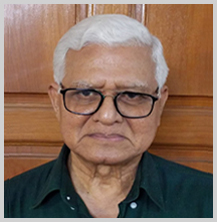
Helal Morshed Khan, Bir Bikram
Major General (Retd, pscAdviser
Major General Helal Morshed, Bir Bikram is a distinguished Liberation War hero, former senior officer of the Bangladesh Army, military strategist, author and national security commentator.
During the 1971 Liberation War of Bangladesh, he served as the Commander of Sub-Sector D (Delta) under Sector 3 and earlier as the Commanding Officer of Delta Company of the 2nd East Bengal Regiment. He took part in major combat operations from the early days of the war, including the Bhairab–Ashuganj defensive battle, the Shahbazpur Bridge raid, Teliyapara and Bagshair ambushes, the Madhabpur–Harshpur train ambush, the Feni–Belonia operations, and the Mirpur Liberation battle in Dhaka. He was wounded twice in direct combat. In recognition of his exceptional courage and contribution to the Liberation War, he was awarded the prestigious national gallantry title Bir Bikram.
After independence, Major General Morshed played a significant role in the development and professionalization of the newly formed Bangladesh Army. He completed advanced Command and Staff training in the United Kingdom and Indonesia, raised and commanded infantry battalions, served as a Directing Staff at the Defence Services Command and Staff College (DSCSC), and as Chief Instructor at the School of Infantry and Tactics (SI&T). He subsequently commanded three infantry brigades, including formations engaged in counter-insurgency operations in the Chittagong Hill Tracts (CHT).
In 1985, while commanding the 203 Brigade in Khagrachhari, he took an early initiative toward dialogue between the Bangladesh Army and the armed representatives of the hill tracts. His initiative contributed to the broader peace process that ultimately culminated in the 1997 Chittagong Hill Tracts Peace Accord.
At the national level, he served as Military Secretary at Army Headquarters, President of the Inter-Services Selection Board (ISSB), Defence and Military Attaché of Bangladesh in Washington, D.C., and GOC of the 11 Infantry Division and Area Commander, Bogura, from which he retired in 1996.
Following his military career, he continued his public service in several fields. He served as an adviser to the Chittagong Hill Tracts Regional Development Board, a Director of Sonali Bank, and later as Chairman of the Central Command Council of the Bangladesh Muktijoddha Sangsad, where he worked for the welfare of Liberation War veterans.
Major General Morshed is also an author of several books and articles documenting his operational experiences during the Liberation War, including works on Ashuganj, the Feni–Belonia front and the final battle of Mirpur. Over the years, he has appeared extensively in television and newspaper interviews, sharing his experiences of the Liberation War and contributing analysis on national and international security affairs. He has received numerous honours from professional, cultural and social organizations for his contribution to the Liberation War and to the welfare of veterans.
Major General Helal Morshed, Bir Bikram, has recently joined The Dhaka Mercantile Co-operative Bank Ltd. (DMCB) as an Adviser. His association with DMCB brings extensive experience in military leadership, organizational management, strategic planning, national service and socio-economic development. Under the leadership of its Chairman, Group Captain (Retd.) Abu Zafar Chowdhury, DMCB has expanded remarkably from seven branches to approximately 153 branches.
Group Captain Abu Zafar, a former Bangladesh Air Force fighter pilot and trained fighter-aircraft instructor, has led this transformation through sustained effort, professional expertise, vision and organizational leadership.
The addition of Major General Helal Morshed, Bir Bikram, is expected to bring further strategic experience and institutional strength to DMCB as it continues to expand its services and pursue its vision of promoting financial inclusion, microcredit and economic self-reliance among people at the grassroots level.